
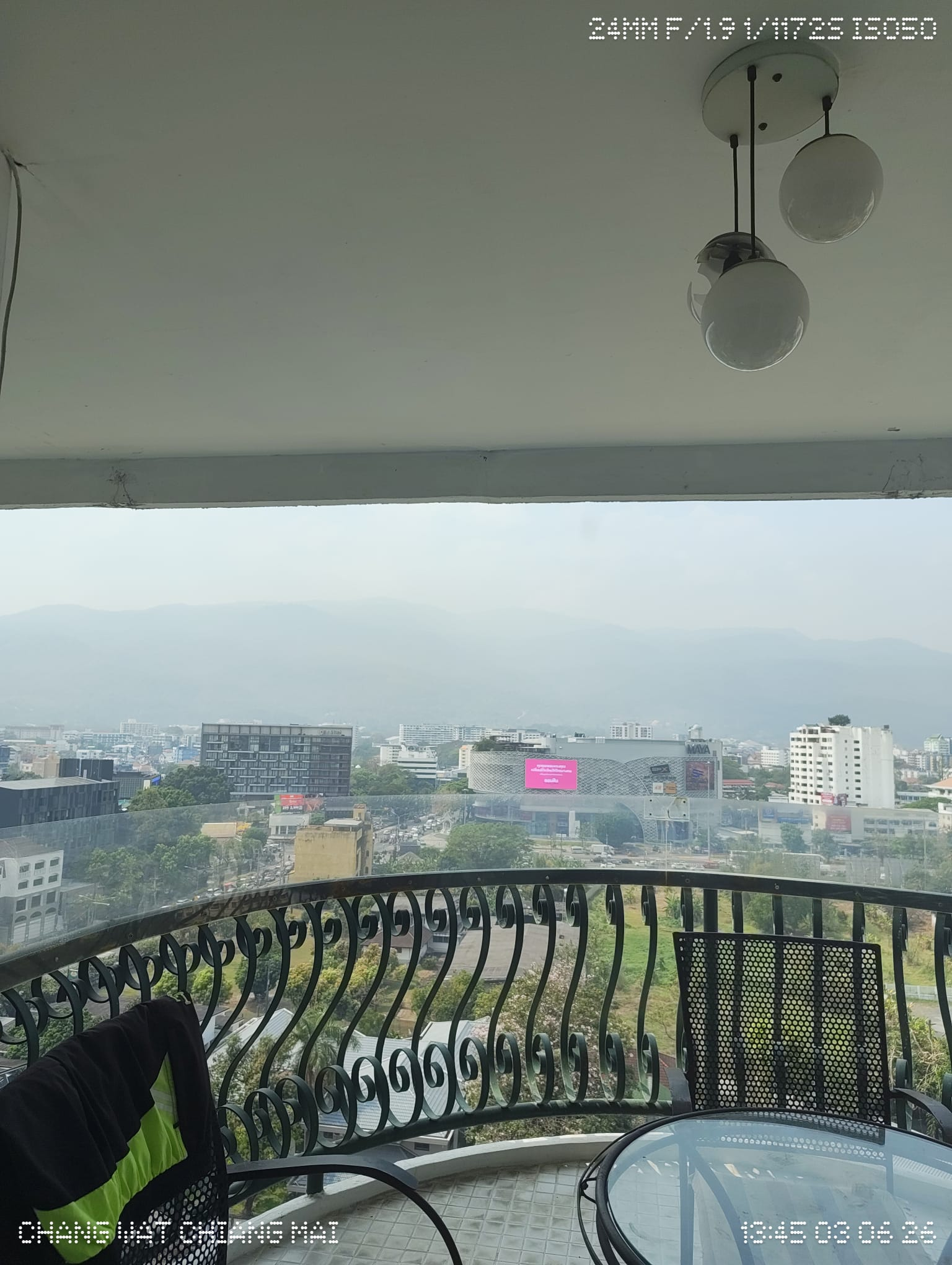
Nobody told me about burning season before I moved to Chiang Mai. I noticed it gradually. A persistent scratchy throat in the mornings. The mountains surrounding the city slowly disappearing behind a white haze that never quite cleared. I assumed it was just fog, or maybe humidity. It wasn’t until I googled “Chiang Mai fog” one afternoon, wondering why the mountains kept disappearing, that I stumbled onto PM2.5 for the first time. I downloaded AirVisual and saw the number staring back at me: AQI 187. I had been breathing that air for weeks without realizing how bad it was.
Right now, as I write this in March 2026, Chiang Mai’s AQI is sitting at 151, which is officially unhealthy. This week, PM2.5 concentrations hit 215 µg/m³ in nearby districts. The WHO recommends a daily average of no more than 15 µg/m³. We are nearly 15 times that.
If you’re thinking about moving to Chiang Mai, or you’re already here and wondering why you feel off, this is the guide I wish had existed when I arrived. No sugarcoating, just honest information from someone who has been living with this for years.
What Is PM2.5 and Why Should You Care?
PM2.5 refers to fine particulate matter smaller than 2.5 micrometers in diameter, which is about 30 times smaller than a human hair. These particles are small enough to bypass your body’s natural defenses and travel deep into your lungs. From there, they can enter your bloodstream.
Short-term exposure causes irritation, fatigue, and reduced lung capacity. Long-term exposure, meaning years of living somewhere like Chiang Mai, is linked to serious cardiovascular and respiratory disease.
The scary part? You often can’t feel it happening, especially if you’re young and healthy. Your body compensates. Until one day, it doesn’t.
When Is the Air Bad in Chiang Mai? Understanding Burning Season
This is the most important thing to understand before you decide when to visit or move here. Chiang Mai has two very different air quality realities throughout the year.
From November to January, the cool season brings relatively clean air. AQI typically stays below 50, which is perfectly fine for outdoor exercise and running. This is Chiang Mai at its best.
February through May is a different story. This is burning season. Local farmers burn their fields after harvest. Forest fires break out in the hills surrounding the city. Smoke drifts in from Myanmar and Laos across the border. Combined with temperature inversions that trap pollution at ground level, this creates a toxic layer that sits over Chiang Mai for weeks at a time.
March and April are typically the worst months. In 2026, it started early and hit hard. 24 wildfire hotspots were recorded in a single day, with helicopters doing water-drop missions over the hills surrounding the city.
From June through October, the rainy season clears everything out. Rain washes the air clean and quality returns to acceptable levels. This is an underrated time to be in Chiang Mai. Fewer tourists, lower prices, and you can actually breathe.
What Does It Actually Feel Like to Live With PM2.5?
For my first year here, I barely noticed. I was healthy, active, and my body seemed fine. But over time, patterns emerged.
Waking up with a slightly scratchy throat on bad days. Feeling more tired than usual during peak burning season. My running times noticeably worse in March compared to November. Eyes that sting a little when AQI spikes above 150.
Nothing dramatic. But unmistakably there.
If you already have asthma, heart conditions, or any respiratory issues, burning season in Chiang Mai is a completely different experience. Local health officials specifically warn elderly adults, children, and people with chronic conditions to stay indoors on the worst days.
The Health Reality: What the Numbers Say
Let’s be honest about the data. Chiang Mai’s yearly average PM2.5 has been worsening, not improving, over recent years. In 2026, only 3% of days so far have met WHO air quality guidelines. During peak season, PM2.5 regularly hits four to six times the WHO recommended daily limit. At its worst this year, readings hit 215 µg/m³, which is nearly 15 times the WHO limit.
For a healthy person in their thirties who exercises and eats well, one bad season probably won’t destroy your health. But years of cumulative exposure add up, and the science on that is clear.
How I Actually Deal With PM2.5 in Chiang Mai
After years of living here, this is my real routine. Not what sounds good on paper, but what I actually do.
The first thing I do every morning is check AirVisual. AQI below 50 means I run outside with no mask. Between 50 and 100 I consider it carefully. Above 100 I take my workout indoors. Above 150 I barely open the windows.
On bad days outside, I wear an FFP2 mask. Not a surgical mask, not a cloth mask. FFP2 filters 94% or more of fine particles when fitted properly. The key is pressing the nose bridge down tightly. Yes, it looks a bit intense at the pool. I genuinely don’t care.
Inside, my air purifier runs 24/7 during burning season. This is probably the single most impactful thing you can do. A decent air purifier with a HEPA filter keeps your indoor air clean even when the city is smoky. When you’re spending eight or more hours a day inside working remotely, indoor air quality matters more than outdoor.
I also adjust when I exercise. On moderate days, afternoons are typically better than mornings since pollution tends to peak in the early hours and again in the evening.
And sometimes the air gets genuinely bad for a sustained stretch. Having an exit plan helps. A beach trip south, a week somewhere else, or just working from a coffee shop in a cleaner part of town. Knowing you can leave changes how you deal with it mentally.
What to Buy Before Burning Season Hits
If you’re planning to live in Chiang Mai long-term, treat these as non-negotiables before February arrives.
Get an air purifier with a HEPA filter and budget at least $150 to $200 for something decent. Brands like Xiaomi, Levoit, and Blueair all work well. Stock up on FFP2 or KN95 masks, at least a box of 20 to 30. Download AirVisual or IQAir for real-time readings. And make sure your health insurance covers respiratory issues.
PM2.5 Action Guide: What to Do at Each AQI Level
When AQI is between 0 and 50, the air is good and you can do normal activities without any restrictions. Between 51 and 100 it’s moderate, fine for most people but those with sensitivities should take care. From 101 to 150 it’s unhealthy for sensitive groups, so limit outdoor exercise and consider a mask. Between 151 and 200 it’s officially unhealthy, so wear an FFP2 outside and run your air purifier indoors. Above 200 you should stay inside, keep windows closed, and only go out with a mask on.
Is Chiang Mai Still Worth Living In?
Yes, but with your eyes open.
Chiang Mai is still one of the best cities in the world for digital nomads. Fast internet, incredible food, low cost of living, a welcoming community, and beautiful nature. For most of the year, the air is genuinely fine.
But burning season is real, it’s annual, and it’s getting worse rather than better. If you have serious respiratory issues, it might be a dealbreaker. If you’re otherwise healthy and take basic precautions, it’s manageable, though not something to brush off.
My approach after years of living here is to stay for most of the year and plan to be elsewhere during the worst weeks of March and April. That way you get the best of Chiang Mai without absorbing the worst of the smoke.
For real-time air quality data, AirVisual and IQAir are the most reliable apps for Chiang Mai. Both are free and give you hourly readings so you can plan your day accordingly.
Leave a Reply