
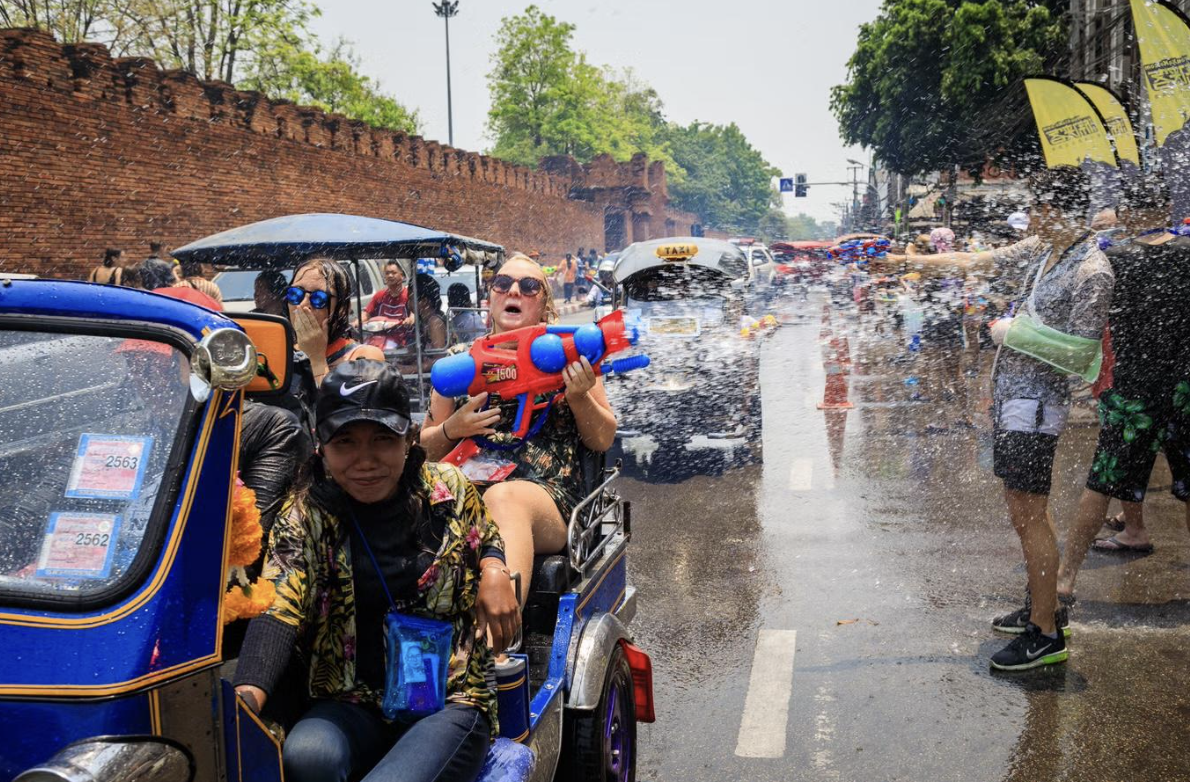
I’ve been watching the city change over the past few days. The streets are a little busier, the guesthouses are filling up, and someone on my soi already has a bucket ready by their front door. Songkran is almost here, and honestly, the anticipation is half the fun.

If you’ve never been in Chiang Mai for Songkran, let me paint you a picture. You turn a corner and before you know it you’re completely soaked. A pickup truck with a bucket of icy water. A kid with a supersoaker. An old lady with a smile and a water pistol. This is the Thai New Year, officially 13 to 15 April, but in Chiang Mai the party runs way longer. I’m already clearing my schedule.
Where I’ll be (and where you should go)
Tha Phae Gate is where the official ceremonies kick off. Parades, cultural performances, and the opening events. It sets the tone for the whole festival and is worth going at least once, ideally in the morning before it gets too crowded.

The Old City moat is where I always end up spending most of my time, and honestly it’s my favourite part of the whole festival. There’s something about walking through that crowd that never gets old. Music is blasting from every direction, strangers wish you a happy new year before immediately dumping water on you, and somehow someone always ends up cheerfully smearing sunscreen on your face like they’ve known you for years. Beer flows freely, conversations start out of nowhere, and before you know it you’re deep in a chat with people from all over the world while standing in the middle of a street that’s more river than road by midday. It’s loud, it’s wet, it’s chaotic — and I wouldn’t change a thing about it.
Nimman and Think Park are where things get more festival-like. DJ sets, pool parties, and a crowd that treats the whole week as one long music event. Think Park is running Night Songkran 2026 across four days with a stacked lineup. I’ll probably end up there at least once.
One Nimman is the pick if you’ve got kids with you. Summer Spark runs from 11 to 15 April with a 7-metre waterslide, two big pools, and loads of inflatables, all for 150 baht a head.
A few things I’ve learned the hard way
Leave your valuable belongings at home and bring only what you’re happy to lose. Waterproof pouch for your phone, small amount of cash, and that’s it. Skip the motorbike: wet roads and flying water don’t mix. And please don’t splash monks, elderly people or babies. That one shouldn’t need explaining, but I see it happen every year.
One thing I always do is spend the morning at Wat Chedi Luang for the procession and Buddha bathing ceremony, then join the water fights in the afternoon. It’s a completely different energy, and doing both on the same day somehow makes the whole thing feel complete.
Oh, and high-pressure water guns are banned this year under the “Safe Songkran” campaign. Honestly, fair enough.
Why Chiang Mai beats Bangkok for this
I’m biased, obviously. But Bangkok is enormous and overwhelming during Songkran. Chiang Mai is human-sized. You get the cultural layer of the Lanna New Year, temples that actually add something to the experience, and still plenty of energy when you want it. This year the city runs celebrations from 11 to 19 April. That’s not a festival, that’s basically a way of life.
I’ll be out there with a bucket. See you on the streets.

Leave a Reply